Attain Excellence with Climb Exam Tutor
Get All Practice Questions
Free Trial Practice Questions

Explore every domain tested on your Climb Exam Tutor. Expand each section to see the subtopics you need to master.
Evaluates the candidate's ability to safely guide clients through complex alpine terrain involving glaciers, snow, ice, and rock.
Covers guiding skills for backcountry ski touring, ski mountaineering, and mechanized (heli/cat) ski operations.
Focuses on the technical skills required to guide clients on multi-pitch traditional rock climbs and complex scrambling terrain.
Assesses advanced avalanche forecasting, snowpack analysis, and terrain management skills equivalent to CAA professional standards.
Tests proficiency in executing complex companion rescues, improvised rope systems, and managing medical emergencies in remote settings.
Covers trip preparation, logistics, and the ability to navigate safely through mountainous terrain in all conditions.
Evaluates interpersonal skills, instructional ability, risk communication, and adherence to professional industry standards.
Focuses on the guide's knowledge of the natural environment and their ability to minimize impact while educating clients.
Test your knowledge with these free preview flashcards. Click a card to flip and reveal the answer, then use the arrows to navigate through the deck. Upgrade for the complete flashcard set covering every exam topic.
Get All FlashcardsWhat is the primary difference between a persistent slab and a wind slab avalanche?
Click to flipA persistent slab fails on a buried weak layer that remains unstable for weeks or months, whereas a wind slab is formed by recent wind-deposited snow and typically stabilizes within a few days.
Persistent slabs are notoriously difficult to forecast and require conservative terrain choices.
In the Avalanche Terrain Exposure Scale (ATES), how is 'Challenging' terrain defined?
Click to flipChallenging terrain involves exposure to well-defined avalanche paths, starting zones, or terrain traps, where options exist to reduce or eliminate exposure with careful route-finding.
This is a step above 'Simple' terrain, requiring experience to navigate safely.
What is the theoretical mechanical advantage of a standard Z-drag (Z-pulley) crevasse rescue system?
Click to flipA standard Z-drag provides a 3:1 theoretical mechanical advantage.
Friction from the snow lip and carabiners significantly reduces the actual mechanical advantage.
Scenario: A client falls into a crevasse while you are travelling on a two-person rope team; what is your immediate first action?
Click to flipImmediately drop into a self-arrest position to halt the client's fall.
Only after holding the fall and building a solid snow anchor can you transfer the load and begin the rescue.
When performing a tandem rappel with an injured client, where should the guide position the client relative to themselves?
Click to flipThe client should be positioned slightly below the guide, attached via a tether to the guide's harness.
This allows the guide to easily control the rappel device, manage the backup hitch, and monitor the client's condition.
What is the primary purpose of a load-releasing hitch (e.g., Mariner's hitch) in a rescue system?
Click to flipIt allows a system under tension to be safely and smoothly released or transferred to another system.
Crucial for passing knots or transitioning from a lower to a raise.
In short-roping, what is the primary advantage of taking 'chest coils' rather than standard mountaineer's coils?
Click to flipChest coils secure the guide's core, distributing the force of a sudden client slip across the torso rather than pulling the guide off balance.
They also allow the guide to quickly adjust the length of the rope between themselves and the client.
When short-roping a client down a steep, exposed 3rd-class step, what is the most secure guide position?
Click to flipThe guide should position themselves above the client, moving sequentially and maintaining a tight rope to arrest a slip before it becomes a fall.
If the terrain is too steep to hold a slip by hand, transition to a short lower off a terrain feature or body belay.
What is the recommended minimum spacing between skiers when crossing a suspected avalanche start zone?
Click to flipSkiers should cross one at a time, moving from safe zone to safe zone.
This minimizes the load on the snowpack and ensures only one person is exposed if an avalanche occurs.
Compare the use of a boot-axe belay versus a deadman anchor in steep snow.
Click to flipA boot-axe belay is faster to set up for dynamic, lower-load situations, while a deadman anchor takes longer to build but provides a much stronger anchor for heavy loads or rescues.
Boot-axe belays are common in fast alpine movement; deadmen are used when a fall is more likely or consequences are severe.
What does a rapidly falling barometer combined with high cirrus clouds typically indicate in a mountain environment?
Click to flipIt indicates an approaching low-pressure system or warm front, likely bringing precipitation and high winds within 24 to 48 hours.
Cirrus clouds thickening into altostratus is a classic sign of incoming bad weather.
How does magnetic declination affect compass navigation in the Canadian Rockies?
Click to flipThe Canadian Rockies have a positive (East) declination, meaning true north is significantly west of magnetic north, requiring navigators to subtract the declination angle from their magnetic bearing.
Memory aid: 'East is least (subtract), West is best (add)' when converting from Magnetic to True.
What is the most effective field treatment for High Altitude Pulmonary Edema (HAPE)?
Click to flipImmediate descent to a lower altitude.
Supplemental oxygen and medications like Nifedipine can buy time, but descent is the only definitive cure.
How do you differentiate between mild and severe hypothermia in a backcountry client?
Click to flipA client with mild hypothermia will be shivering and alert, whereas a client with severe hypothermia stops shivering and experiences a significant altered level of consciousness.
Severe hypothermia requires extremely gentle handling to avoid triggering ventricular fibrillation.
What does the acronym EARNEST stand for when evaluating climbing anchors?
Click to flipEqualized, Angles (appropriate), Redundant, No Extension, Solid, and Timely.
This has largely replaced the older 'ERNEST' or 'SRENE' acronyms to emphasize efficiency (Timely).
When building a V-thread (Abalakov) ice anchor, what is the optimal angle between the two drill holes?
Click to flipThe optimal angle between the two ice screw holes is approximately 60 degrees.
This creates an equilateral triangle of ice, maximizing the strength of the anchor.
Scenario: A client freezes due to fear on an exposed alpine ridge; what is your first step as a guide?
Click to flipSecure the client with a tight rope or anchor, then use calm, clear communication to lower their heart rate and break the task into small, manageable steps.
Never yell or rush a panicked client; establishing physical security first builds psychological confidence.
According to typical ACMG standards, what is the standard maximum client-to-guide ratio for complex technical alpine terrain?
Click to flipThe standard maximum ratio is 2 clients to 1 guide (1:2).
Ratios may decrease to 1:1 on highly technical or severely exposed routes.
What is the primary function of a Micro Traxion or similar progress-capture pulley in hauling systems?
Click to flipIt allows the rope to be pulled in one direction while automatically locking to prevent the load from slipping backward.
Essential for the 'tractor' position in a Z-drag or as a master point progress capture.
Define the 'fall factor' in rock climbing.
Click to flipFall factor is the length of the fall divided by the length of rope paid out in the system.
A fall factor of 2 is the maximum possible in a standard climbing scenario, occurring when a climber falls past the belayer with no gear placed.
You've reached the end of the free preview. Unlock the full deck with all 200+ flashcards covering every exam topic.
Get Premium AccessExplore the interconnected concepts you need to master for your exam. This free preview reveals the breadth of topics covered. Upgrade to unlock the full mind map with every concept, sub-topic, and study pathway mapped out.
Get Full Mind MapMaster your Climb Exam Tutor with the top study resource on the market
Get All Practice Questions
Gain unrestricted access to practice questions anytime and anywhere you require. Climb Exam Tutor operates effortlessly across all mobile devices, laptops, and electronic gadgets.
Get All Practice Questions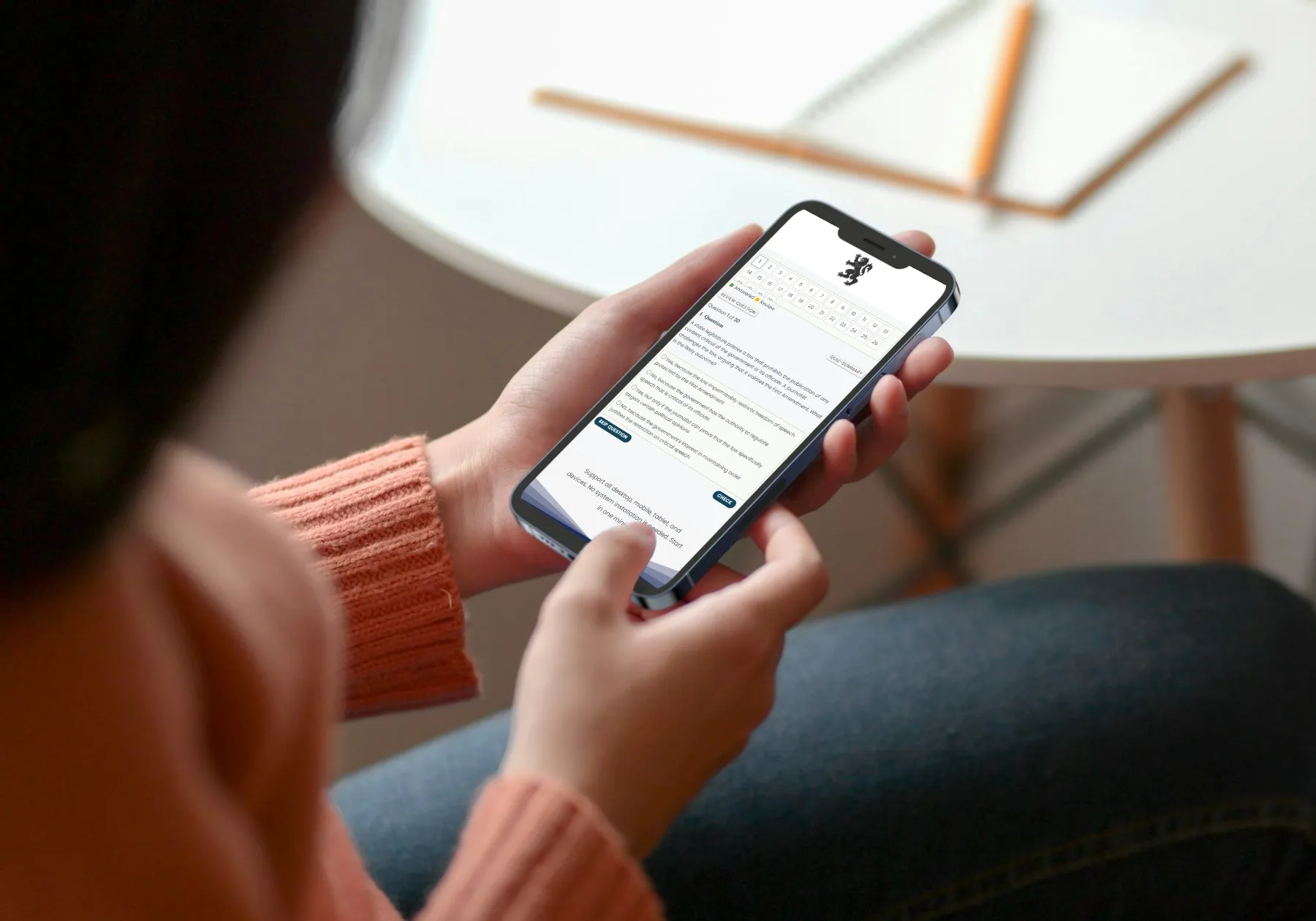
Every practice question, study note, and mind map is carefully crafted to help candidates like you conquer the Climb Exam Tutor with ease.
Get All Practice Questions
Reinforce your learning with premium video study notes that cover the most critical topics for your Climb Exam Tutor. Watch, review, and retain — at your own pace.
Get All Study Materials
Climb Exam Tutor comes with a 100% success guarantee, but we go even further. We don’t just want you to pass; we want you to excel. Picture your colleagues' faces when they see your new professional credential on LinkedIn. Think about how much easier your next promotion will be when you have the certification to back it up.
Here’s our iron-clad promise: if you don’t pass the exam within one year, we’ll extend your full access completely free of charge — no questions asked, no hoops to jump through, and no proof required. Study at your own pace knowing that you’re fully covered.
Whether life got busy, you need extra time to prepare, or you simply want another round of practice — we’ve got you. Your success is our reputation, and we’re putting our money where our mouth is with this unconditional free extension guarantee.
Our practice questions are meticulously designed to replicate the real Climb Exam Tutor experience. Every question comes with thorough explanations, clarifying why the correct answer is accurate and why the other choices fall short.
Secure instant access once your payment is confirmed. You will promptly receive full access to a wide range of study materials, featuring practice questions, study guides, and detailed answer explanations.
If you do not obtain Climb Exam Tutor certification after utilizing our platform, we will prolong your access at no additional cost until you succeed, valid for one year from the date of purchase.
Climb Exam Tutor is crafted to function seamlessly across all devices. Study with ease on smartphones, tablets, iPads, and computers using our flexible platform design.
Our questions mirror the format and challenge of the Climb Exam Tutor while adhering to ethical guidelines. We respect the copyrights of the official body and create unique content that promotes genuine understanding rather than simple rote learning.
An official invoice will be emailed to you immediately after your purchase. This invoice will contain your contact information, details about the product, the payment amount, and the date of the transaction for your records.
Our past candidates love us. Let's see how they think about our service
Grateful for Climb Exam Tutor for their exceptional resources. The study materials were thorough and straightforward. Their emphasis on practical examples helped me grasp Climb Exam Tutor concepts effortlessly.
As a full time professional, Climb Exam Tutor adaptable study approach was ideal. The mobile application allowed me to study while commuting. Their extensive question bank is impressive.
I used to feel overwhelmed by the Climb Exam Tutor, but Climb Exam Tutor turned studying into a manageable and even enjoyable experience. I truly appreciate this resource.
Just completed my Climb Exam Tutor with the help of Climb Exam Tutor. The practice questions were tough yet reasonable. The thorough explanations clarified the reasoning behind each response.
Climb Exam Tutor transformed my preparation into an enjoyable experience. The engaging quizzes and real-world case studies kept my interest high. The performance tracking tools were invaluable.
Preparing for the Climb Exam Tutor felt daunting until I discovered Climb Exam Tutor. Their organized strategy and weekly study schedules helped me stay focused. I aced the exam with flying colors.
Join thousands of successful professionals who have enhanced their careers using our platform.
Enable Premium Access